Showing posts with label Professional Practice. Show all posts

Thursday, November 9, 2023

What the Supreme Court Decision Means for Architectural Documents in the Philippines

A long-running dispute over who may prepare, sign, and seal architectural documents reached the Philippine Supreme Court in the consolidated cases Department of Public Works and Highways v. Philippine Institute of Civil Engineers, Inc. and United Architects of the Philippines v. Philippine Institute of Civil Engineers, Inc., G.R. Nos. 200015 and 205846.

The Court's 15 March 2023 decision matters to architects, engineers, building officials, clients, and students. It should be read carefully, not celebrated as a licence to belittle another profession.

What was being challenged?

The dispute concerned Section 302(3) and (4) of the 2004 Revised Implementing Rules and Regulations of the National Building Code. Those provisions assign architectural documents to architects for preparation, signing, and sealing. The Philippine Institute of Civil Engineers and Leo Cleto Gamolo challenged the provisions, arguing that civil engineers retained authority under the Civil Engineering Law and the National Building Code.

The Regional Trial Court upheld the provisions. The Court of Appeals reversed that result and recognized civil engineers' claimed authority over documents listed in Section 302(4). The DPWH and the United Architects of the Philippines then brought the controversy to the Supreme Court.
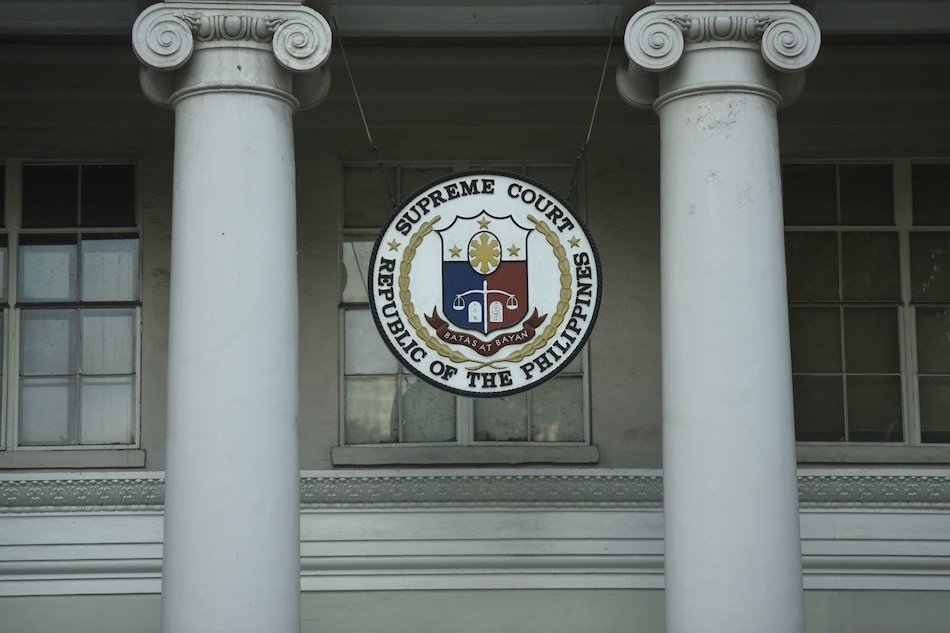
What did the Supreme Court decide?

The Supreme Court granted the consolidated petitions, reversed the Court of Appeals, and reinstated the trial court decision that upheld Section 302(3) and (4) of the 2004 Revised Implementing Rules. The Court resolved that only registered and licensed architects may prepare, sign, and seal the architectural documents enumerated in the decision and the relevant rules.

The Court examined competing versions of Section 302 of Presidential Decree No. 1096, the publication requirement, Republic Act No. 544, Republic Act No. 9266, and the authority of the DPWH to categorize architectural documents in its implementing rules. Its reasoning cannot be reduced to the casual idea that a floor plan is obviously architecture. The legal conclusion rests on statutory text, publication, reconciliation of laws, and delegated rulemaking authority.

What the decision does not mean

The decision does not authorize architects to sign structural, mechanical, electrical, sanitary, or other professional documents outside their lawful competence. Nor does it diminish the essential work of civil engineers in structural and civil engineering. A complete building requires several accountable professionals whose documents must be coordinated.

It also does not justify plan signing as a ceremonial transaction. Republic Act No. 9266 ties the architect's seal to authorship, direct professional responsibility, and work prepared by or under the architect's direct supervision. Signing a document one did not actually prepare or supervise defeats the very accountability that exclusive signing authority is intended to protect.

Practical implications

Architects should ensure that their architectural documents are competently prepared, coordinated, and issued under clear appointments. Engineers should sign the engineering documents for which they are responsible. Building officials should apply the governing law and current rules consistently. Clients should appoint the proper professionals early instead of collecting signatures after design decisions have already been made.

Schools have an obligation too. Students should learn the boundaries of authorship and coordination before professional habits form. The lesson is not that one discipline defeated another. The lesson is that the public deserves to know who made each professional decision and who accepts responsibility for it.

Anyone relying on this case for a permit, dispute, or formal legal position should read the complete decision and check for current implementing issuances and later case records. A blog post can orient the reader. It cannot replace the controlling text or competent legal advice.

See Court Decision here: 200015.pdf (judiciary.gov.ph)


Thursday, February 27, 2020

Why a Written Service Agreement Protects Both Client and Architect

A written agreement can feel overly formal at the beginning of a friendly project. The client is excited. The architect is eager to help. Everyone believes the important details can be settled as the work proceeds. Then the first revision arrives, the budget changes, a consultant is needed, or someone remembers the conversation differently.

That is not always bad faith. Human memory is simply an unreliable project-management system. arrangement.

A contract is a shared map

The best service agreements do more than protect the architect's fee. They tell both parties what journey they have agreed to take. What is the project? What services are included? What will be delivered? Who makes decisions? How are consultants appointed? What information must the client provide? How will changes affect time and compensation? How can either party pause or end the engagement?

Republic Act No. 9266 expressly recognizes a written service agreement in architectural practice. That legal requirement matters, but the practical reason is even easier to understand: a building project contains too many decisions to rely on goodwill alone.

Clarity is not hostility

Some clients hesitate because contracts look one-sided or are written in intimidating language. That is a fair concern. An architect should be willing to walk through the agreement in plain language, identify negotiable terms, and explain why particular protections are present. A client should have time to read, ask questions, and seek independent advice when the commitment is significant.

The goal is informed consent, not a hurried signature.

At a minimum, the agreement should define the scope and exclusions, deliverables, programme, fee and payment schedule, reimbursable expenses, client responsibilities, consultant arrangements, review and approval points, additional services, change procedures, ownership and permitted use of documents, suspension or termination, dispute process, and the limits of any stated duty.

Changes are where weak agreements usually fail

Design changes are normal. What creates conflict is an unrecorded change whose effect is discovered too late. A useful agreement establishes how changes are requested, evaluated, approved, documented, and paid for. It also distinguishes a correction from a client-directed revision, a regulatory requirement, a consultant change, or new work caused by previously unknown conditions.

Written records do not need to make the relationship cold. A short confirmation after a meeting can preserve a warm working relationship by preventing a future argument about what was decided.

A contract cannot replace competence or trust

No document can rescue a project from poor judgment, chronic indecision, inadequate coordination, or dishonest conduct. The agreement creates a framework. The people still have to communicate, keep records, meet their obligations, and address problems early.

Nor does a breach automatically produce a quick remedy. Rights and remedies depend on the wording of the agreement, the facts, the evidence, and applicable law. When a dispute becomes serious, the parties may need qualified legal advice.

Before work begins, both client and architect should be able to answer a simple question: if we disagree six months from now, where will we look to understand what we promised each other? If the answer is only memory, the project is already carrying avoidable risk.


Read other articles:

Monday, January 13, 2020

Architects and Civil Engineers: Clarifying Professional Roles Without Turning Collaboration Into Conflict

Why do disputes between architects and civil engineers become so heated? Part of the answer is practical. Both professions contribute to buildings, and clients often encounter them at the same table. Confusion begins when collaboration is mistaken for interchangeability.

A building is one project, but it contains several bodies of professional responsibility. Architectural planning, spatial organization, building character, environmental response, structural systems, utilities, construction methods, and regulatory compliance must be coordinated. Coordination does not erase the legal scope or accountability of each professional.

Start with the law, not professional folklore

Republic Act No. 9266 defines architecture and the scope of architectural practice. It also addresses the preparation, authorship, signing, and sealing of architectural documents. Civil engineers, for their part, have an established and indispensable role in structural and civil engineering work under their governing law and applicable regulations.

The public controversy over Section 302 of the 2004 Revised Implementing Rules of the National Building Code reached the Supreme Court. In its 15 March 2023 decision in G.R. Nos. 200015 and 205846, the Court granted the consolidated petitions, reversed the Court of Appeals, reinstated the trial court ruling that upheld the relevant provisions, and identified architectural documents that only registered and licensed architects may prepare, sign, and seal.

That holding deserves accurate reporting. It should not be inflated into a claim that architects can perform every engineering service, nor should it be minimized into a matter of professional pride. The point is responsibility. A signature and seal identify the professional who prepared or directly supervised the work and who accepts accountability within the applicable scope.